
The new MV Triton of Rederij Tasman, built at Royal Bodewes, is delivered and sailing. For this vessel Marble Automation delivered a complete automation package, from the alarm monitoring system to the propulsion control and the power management. A large part of the work was done together with Piet Brouwer Elektrotechniek, a partner Marble knows well from many earlier projects.
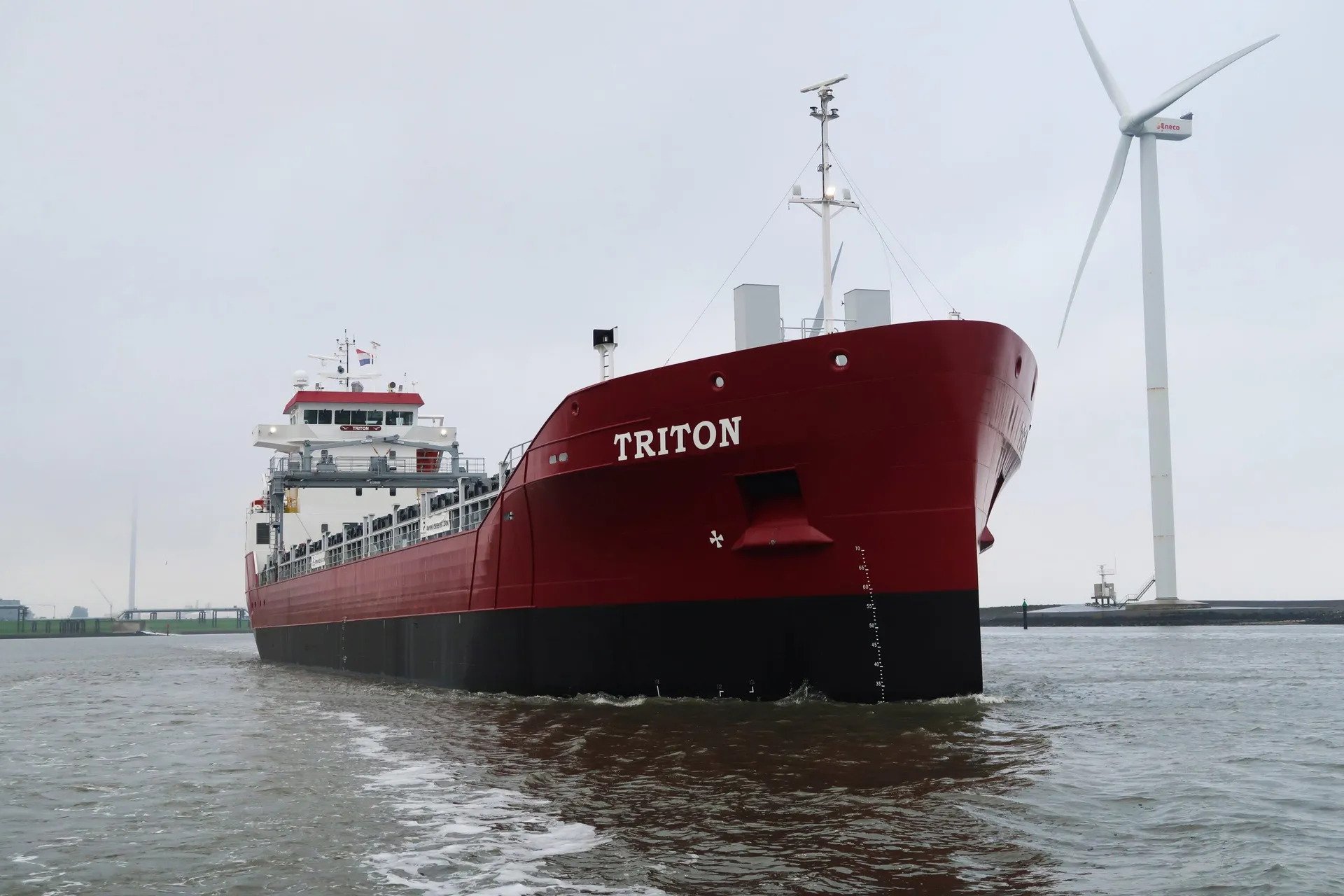
Tested at sea
The Triton has diesel-electric propulsion, with the E-Propulsion system of Piet Brouwer Elektrotechniek. In this system the propulsion control, the power management and the energy management are tuned to each other and form one installation. During the sea trials all functions were measured and set up.
The real test came after that: the first voyage of the vessel, to Nesna in Norway. Engineers of Marble Automation and Piet Brouwer Elektrotechniek joined the crew. For more than four days they watched how the installation responded on open sea, with a constantly changing power demand and the vessel in waves and wind. Where needed, they adjusted the controls on the spot. On arrival, the system did in practice exactly what it was designed for.
One system for the whole vessel
The heart of the automation onboard the Triton is the Marble alarm monitoring system. All important signals of the vessel come together here: engines, generators, tanks, pumps and much more. When a value goes outside its limits, the crew gets a clear alarm with exactly the information that is needed to act fast. On the screens on the bridge and in the engine room the crew sees at one glance how the vessel is doing.
Power management for AC and DC
Together with Piet Brouwer Elektrotechniek, Marble Automation delivered the power management system for both the AC and the DC network onboard. The system controls the generators, divides the load and makes sure there is always enough power for the consumers that need it. Generators start and stop automatically, based on the actual demand. This keeps the power supply stable and saves running hours on the generators.
Propulsion and bow thruster control
The propulsion control is fully connected to the rest of the automation, so all propulsion alarms and data are visible in the alarm monitoring system. The bow thruster control was delivered in the same way. From the bridge the captain has direct and accurate control over the vessel, which counts most when manoeuvring in ports and narrow waters.
Unmanned engine room
The Triton is equipped with a UMS (Unmanned Machinery Space) system. With UMS the engine room can stay unmanned for longer periods, for example during the night. Alarms are passed on to the bridge and to the engineer on duty, so there is always someone who knows when something needs attention. Throughout the vessel, MS2006 UMS extensions show the alarms in places like the cabins and the mess, and let the engineer on duty respond directly.
Next to that, Marble supplied other essential vessel equipment, like the emergency telegraph. If the regular control system fails, orders from the bridge still reach the engine room without delay.
Good cooperation
Building a new vessel asks for good teamwork between the yard, the electrical installer and the automation supplier. With Royal Bodewes and Piet Brouwer Elektrotechniek this went smoothly: short lines, clear agreements and a lot of shared experience, from engineering to commissioning onboard. We thank Rederij Tasman and Royal Bodewes for their trust.
The Triton now sails along the Norwegian coast, and we wish the vessel and her crew many good voyages. Planning a new build or a refit, or looking for automation for diesel-electric propulsion? Marble Automation delivers the complete automation package, together with the partners you already work with.
 English
 Nederlands